The Counter
The advertising industry learned to measure the moments before you decide. Now their tools are learning to govern.
It was my first week at a new job. The boss wanted me close. His two-story office was glass on two sides. One side looked out on the parking lot. The other looked in on us. From his office, we were figures behind glass, visible by default. The wall behind him had brand logos. The fourth wall was hung with rare skateboards: decks too valuable to ride, mounted in a grid. Scrappy things made beautiful by being taken out of circulation. He faced them every day. It was all new to me.
I was here because I knew how to design systems to track things that move. My advertising skills were nominal, and my new cohort spoke the lingo fluently, like people who had invented it. I needed to get up to speed.
The boss operated by changing the conditions in the room. In meetings, he would lift one person's ideas above another's, often for reasons that seemed cruel or arbitrary. A proposal praised on Monday might be dismissed on Wednesday. Someone ignored all week might suddenly become the person whose opinion mattered. It took me a while to understand that consistency was beside the point. Reaction was. He wanted response more than agreement. He was watching who rose when the room changed.
At the time I thought his game and my job were two different things. Much later I understood they were the same experiment: change one variable. Observe the response.
He did it with recognition — something that was scarcer than attention, and the one thing everyone there had come to want. The software measured interactions with content and buttons. Both systems ran on the same question: what does a person reveal when something they want is made just a little harder to reach?
The language came at me sideways, in meetings, over desks. I didn't know what it meant. It sounded like this:
"What's the dwell on the hero above the fold?"
"CTR's flat and cart abandonment's up at payment."
"Can we improve conversion?"
You learned to say these things flatly, the way you'd report the temperature outside. The flatness was the point: it was how a person scrolling a page became a set of values that you could move. Most of it decoded into something ordinary. Cart abandonment was the one we cared about most: the person who filled the basket and then, at the final screen, walked away. The whole vocabulary named the places where attention was won or lost, and somebody put prices on them.
We sold predictions. Attention was the raw material they were made from.
A click was cheap and a little suspect by 2013 because anyone could click, and bots clicked, and fingers missed sometimes. Besides, we wanted to measure what was driving those clicks. We wanted to quantify the consideration, the pause before a decision, the hesitation. We called this thing dwell. We argued successfully that dwell was worth more than a click because it had duration that suggested the magnitude of a guest's intention. A click could be accidental, but a pause almost never was.
I wanted a better tool. At the time, we measured interactions with Adobe Omniture, an enterprise analytics system built around decisions made in advance. You defined the dimensions, events, and dashboards when the system was installed. After that, the software mostly told you what you already knew.
I wanted something open and self-hosted. I wanted the raw record of each visit, so we could return later with questions we had only learned to ask after the fact. Dwell time, for example. Where on the page did people hesitate? Where did they stop reading? Where did a page seem to work because someone stayed, rather than because someone clicked?
I got nowhere. The old system stayed because the company had already arranged itself around it. Leadership trusted its reports. The sales team read its dashboards every morning. Years of careful configuration had accumulated inside it, and no one wanted to rebuild it. A way of counting people, once it is in place, comes out only when keeping it finally costs more than tearing it out — and that never happens on its own.
The mission, the one we said out loud, was good. We were helping people, mostly women, who had built real trust with real readers by reviewing small things honestly, turn that trust into a living. I believed that. Or I believed it enough. You can believe in the work and still be building an instrument that will later be aimed somewhere you would never have agreed to aim it. That is the ordinary way these things happen. The future use isn't part of a villain's plan. It is hidden in the usefulness of the tool.
I understood this slowly. I had been learning to run the instrument from inside it. Everyone in the building believed we were measuring dwell.
I didn't think about any of this again until I read a newspaper investigation this spring.

The word is older than the metric.
To dwell once meant to delay, to hesitate, to linger before moving on. Later it came to mean remaining in a place: abiding, staying, making a home. From there came the metaphor of dwelling on a thought, lingering with it instead of leaving it behind. Advertising kept the lingering and discarded the place. Dwell became the number of seconds a person paused before clicking away. Those seconds acquired a price. A word for hesitation, attention, and human presence became a unit of commerce.
No one decided to do this. I am being careful here, because I want to name a culprit, but there isn't one. What happened was slower and harder to indict: an entire industry converged on a world in which hesitation left a trace.
The World Wide Web became an instrument no behaviorist would have dared to dream of. People enter it voluntarily and never leave. It is a box that feels like a world. It is a place you live: a place to shop, to read, to apply, and to decide. The measurement happens because you are living there. Nobody locked you in. They made it possible to stay. The experiment stopped being a room you could be led out of. It became an environment.
Compare behaviorism. For much of the twentieth century, the science of behavior began with a practical surrender: the inside of a person lay beyond measurement. A wish could not be weighed; a hesitation could not yet be clocked. So behaviorists treated observable action as evidence: stimulus and response, the press of a lever, the arrival of a pellet. The mind became the sealed box, and the interval where a person decides was set aside because no instrument could reach it.
The web touched it. The sealed box stayed sealed, but its shadow became measurable. Dwell was one way of measuring that shadow. Thought itself remained hidden; its residue appeared when it slowed the body down. A person's decision stayed out of view, but the duration of their remaining could be clocked. Across an enormous range of choices, that was enough. Reading the mind became unnecessary. Clocking the pause was enough.
The claim is easy to inflate, but the truth is more interesting. The instrument was never precise: a person might dwell because they are reading closely, or because the page froze, or because they walked away from the screen and left the tab open. The signal is noisy. It is a probability, not a confession.
But institutions do not choose the truest measurement: they choose the one that they can make. The pause was never a clean reading of the interior. It was a reading that could be collected continuously, compared across millions of people, and then sold. Hesitation had always been legible to a parent, a teacher, a salesman across a counter. What was new was not the inference. It was the industrialization of it.
And then it was priced.
This is the step that is easy to skip, and it is the one that turned a measurement into a force. A trace that can be measured is a curiosity. A trace that can be sold recruits an economy. Once dwell had a price — once an advertiser would pay more for a lingering eye than a passing one — the measuring of it stopped being optional. The market took the number and demanded more of it, more finely, everywhere. This was the world I was hired into: an industry built less on the invention of the measurement than on its price. The sequence ran behavior, then trace, then measurement, then price, and price is the rung that pulls all the others into permanence. Measurement asks a question. Price answers it with money, and money does not let the question close.
The institution you cannot leave is the one you should worry about.
You can close an account. You can delete an app, abandon a platform, walk out of a store and never come back. The commercial web, for all its appetite, must first persuade you to enter. A retailer has to win your presence. The state already has it.
You go to the market because you want something. You go to the government because you must. To be born is to be recorded by it; to drive, to marry, to work, to own property, to leave the country, to vote, to die: each is an errand at one of its counters. There is a form for every threshold of a life, and behind every form an office. From that office, there is no unsubscribing.
And the office, for as long as there have been offices, has been nearly blind. It could see what you submitted. It couldn't see what you did while deciding whether to submit. The clerk took your completed application; the clerk never saw the hour you spent failing to complete it, the questions you reread, the ones you started to answer and then erased. The interval where a citizen deliberates over the state was private for the oldest and most boring of reasons: no instrument reached it. The counter recorded only the result.
It is the behaviorists' sealed box again, scaled to a nation. The state could count what people did: the application filed, the benefit claimed, the box checked. It couldn't watch them decide.
And then the counter became a web page.
A web page is only a document. It becomes an instrument when someone decides to measure what happens on it. The web made that measurement possible. Instrumentation made it real. The shadow the box casts doesn't care whose box it is, but someone still has to choose to read it. On a government counter, someone did.
This is the part to say plainly, because it is easy to dress up, though there is nothing novel about it. When a government service becomes an instrumented website, it inherits the capabilities built into modern analytics infrastructure, including the one the advertising economy was built to exploit. A .gov page can measure dwell for the same reason a shopping page can. The moment the passport application became a web form and someone turned the measurement on, the hour a citizen spent interacting with it became visible. It left a trace. It became, in principle, a number.
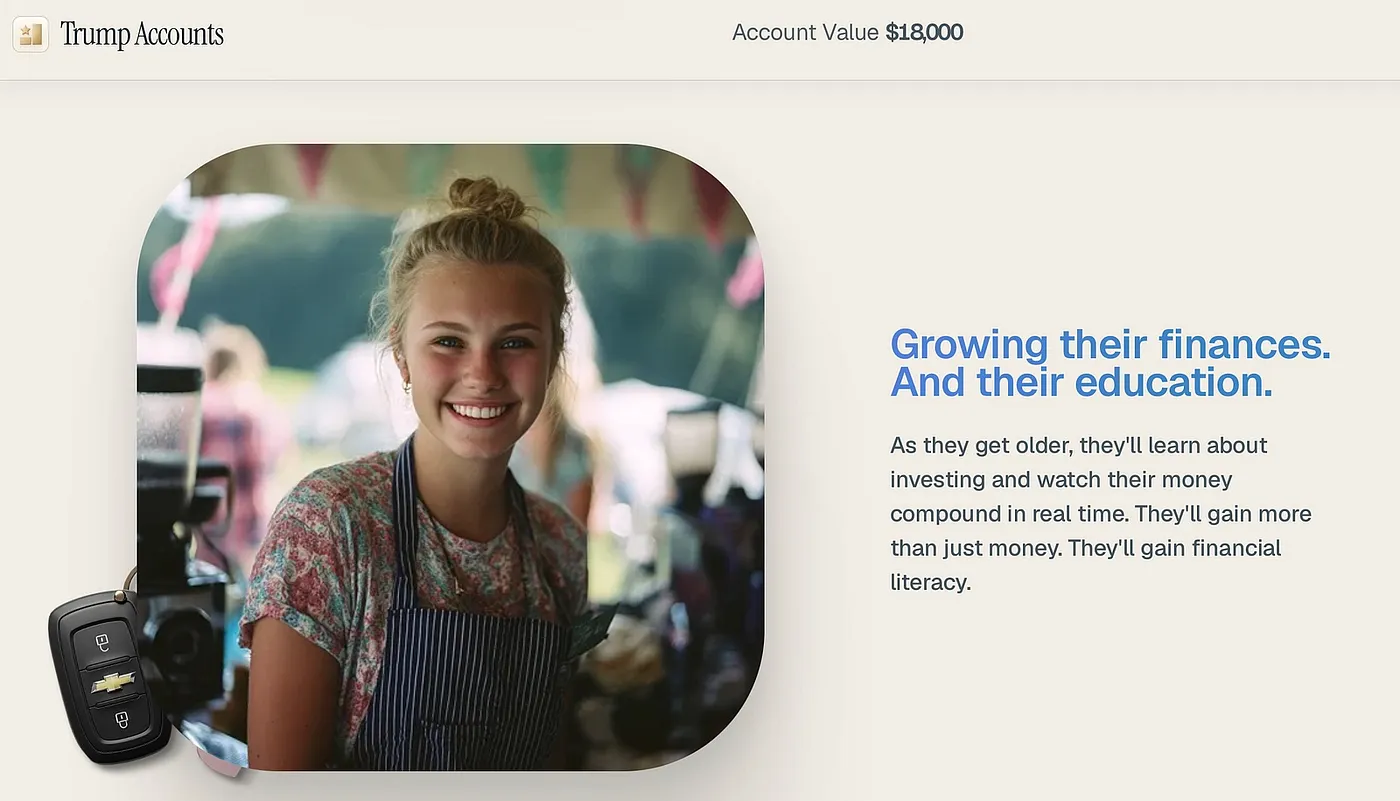
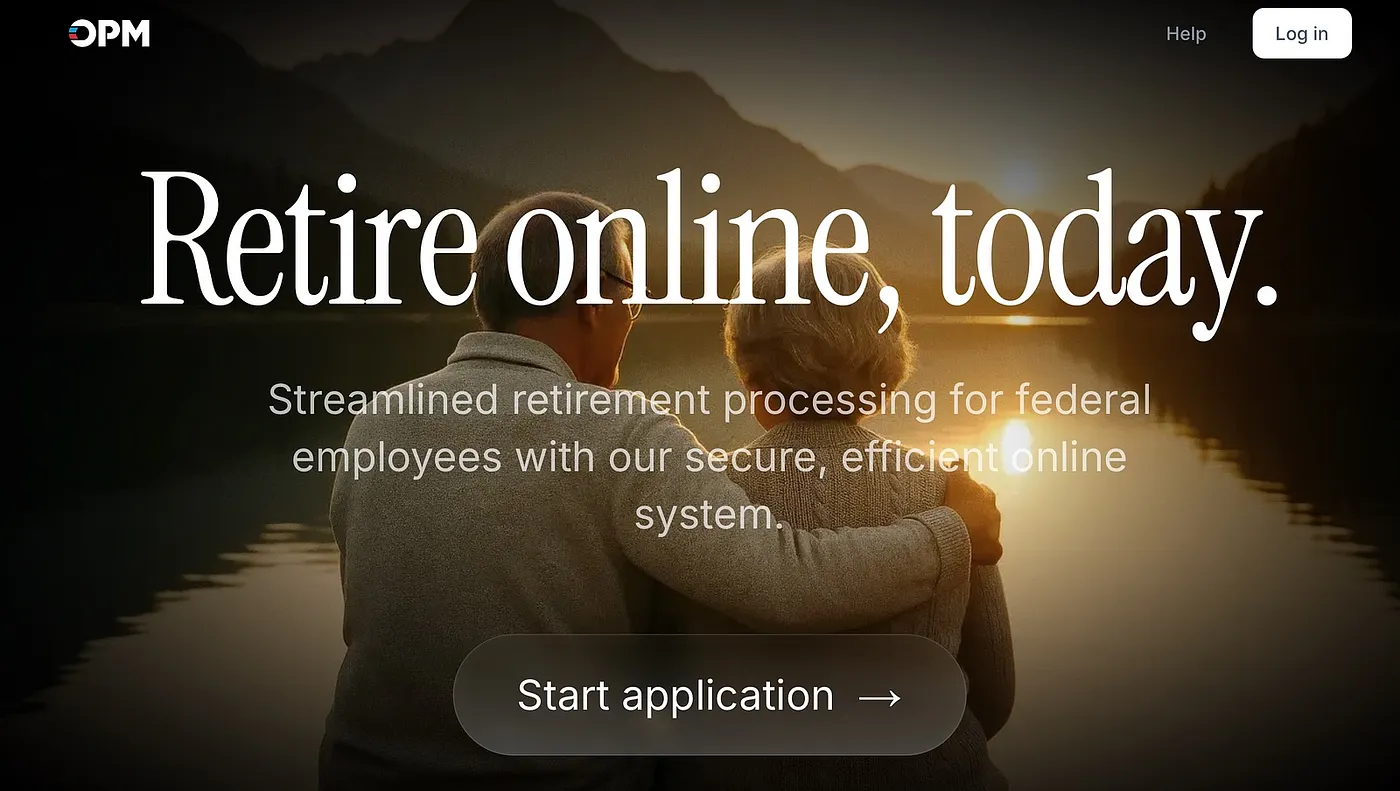
What the National Design Studio did, then, was quieter and more consequential than inventing a surveillance apparatus. It took the federal government's counters, passports, voter registration, prescription pricing, children's savings accounts, residency applications, rebuilt them as modern websites, and instrumented them the way modern websites are instrumented. It pointed the advertising industry's tools at the citizen in the act of dealing with the state.
When I read this article in The Guardian, I didn't feel the shock the headline suggested. I felt recognition. I knew the tool, and I had helped sell the thing it measured.
PostHog is not exotic. It is a competent, ordinary analytics platform of exactly the kind I would have used. Among its features is session replay, which reconstructs a visit from recorded events: scrolls, clicks, movements through a page, so the session can be watched again afterward. In the reported case, investigators found that this recording had been enabled on some federal sites before the code was removed.
The findings were specific, and they have been laid out carefully elsewhere. But what stopped me was the familiarity, more than any single finding. The same machine I had served had found a new customer. The customer was the government. And the thing being measured had shifted from whether you would buy to how you approached the state: the interval between obligation and action, the deciding itself.
Consider an afternoon that would have left no record under the old arrangement and a usable one under the new.
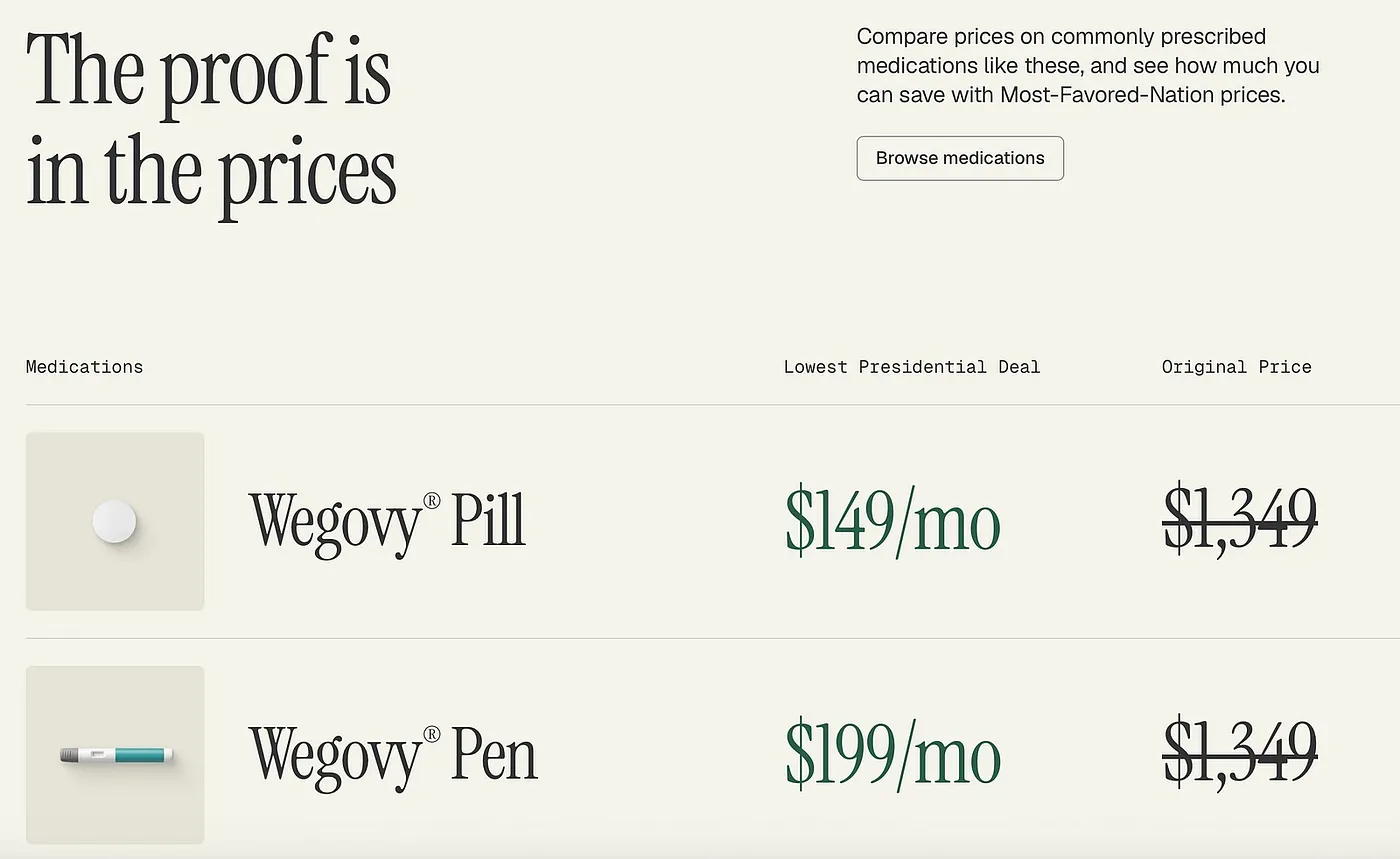
A woman opens trumprx.gov because the drug she takes costs more than she makes in a week. She reads the page slowly. She hovers over one price, then another. She does the arithmetic people do, the arithmetic of which bill to defer, and the page sits open while she does it, because deciding takes longer than clicking ever does.
In the end she closes the tab. Whatever the verb is, enroll or buy, she leaves it undone. Under the old arrangement, a clerk, a counter, a paper form, none of this happened in the way that matters here. Nothing was recorded, because there was nothing the counter could see. A person who looks and leaves leaves no trace at a counter. She is simply someone who never came in.
On an instrumented page, she counts as someone who came in. She is a session. The looking was recorded. The hovering was recorded. The arithmetic was recorded too, rendered as the seconds between one price and the next. And the leaving, the closing of the tab without the purchase, was recorded most legibly of all. In the grammar of this measurement, not-buying is not an absence. It is an event.
What the instrument gives the state, it gives in three forms, each a kind of knowledge the counter could never hold.
The first is the population of the considering.
A government has always known who complied: who filed, who enrolled, who registered, who showed up. It has rarely been able to see, at scale and in real time, who considered complying and chose against it. That second population is far larger than the first. For every person who completes a thing, many more approach it, weigh it, and withdraw.
They looked into the benefit and decided, for a private reason, to leave it alone.
At a counter these people are invisible by nature. Only arrivals can be counted. The instrument makes the others visible. It renders the considering as well as the doing, at a scale governments have generally been unable to observe directly.
To know who acted is ordinary. To know who hesitated is new.
The second is the path: the deciding rendered as something you can watch.
Session replay produces more than a statistic. It produces a representation. The researchers who first documented the technique described the experience exactly: watching a replay is like looking over someone's shoulder. It is a re-enactment of the visit: the cursor's hesitations replayed in time, the scroll that stopped at the line that gave her pause, the field she filled and cleared and filled again.
On the federal sites, this was concrete. The replay tool was deployed in code on all four. It was enabled on two. On the other two, it was installed and switched off, held inactive by a single setting on a dashboard, flippable by whoever controlled the site without touching the code.
That distinction, between installed and enabled, is the whole matter. The difference between a government that might someday decide to watch and one that has already wired the room and left the camera dark is a single setting.
The third is identity.
Commercial analytics spends enormous effort trying to discover who the lingering eye belongs to. The anonymous someone is the advertiser's central, expensive problem. Government begins with authentication. Before many services can be used, you must prove who you are — identity verified through Login.gov, the federal gateway. It establishes your identity first. The deliberation happens afterward.
The pause is therefore more than an anonymous pause. It occurs within a system already organized around an identified person. The system may still infer intent from the pause, but it already knows whose pause it is. The deliberation and the deliberator arrive in the same record.
Put the three together and the hardest case to wave away is the one the studio actually built: a copy of vote.gov.
The federal voter-registration site was designed to sit outside direct presidential control. After the disputed election of 2000, Congress placed that machinery under an independent bipartisan commission, away from direct White House control. The studio's version moves the architecture in the other direction: a voter-registration page on White House systems, behind a White House login, with identity routed through a federal gateway.
Set the three forms of knowledge on that page and read what becomes visible: who is registering; who began to register and stopped; where, in the act, an identified person hesitated in the weeks before an election. The law was written to keep voter-registration machinery at a distance from the presidency. This architecture shortens that distance.
The point is the capacity to look, not the proof that someone has used it.
I want to hold the same line that the reporting holds. The public record doesn't show what was collected while the tools were live, whether it was kept, or who has it now. The tracking was removed after questions came. I am claiming something narrower and harder to dismiss: the capability to make recordings was installed on some of the most sensitive counters a citizen approaches, by an office that filed none of the disclosures the law requires and appears in none of the records that would let anyone check.
The pipe was built to carry this. Whether it did is a question only the people who built it can answer, and they have offered no answer.

There is a question I have been holding since the glass building, and it is the one that matters now. Once an institution can measure something about people, it almost always begins trying to move it.
That claim is practical rather than cynical. It is simply what the number is for. We measured dwell to raise it: to find the headline, the image, the arrangement of the page that made the lingering last a half-second longer, because the half-second was worth money. Measurement began the process. It was the first step in a loop: measure, change something, measure again, keep what worked.
The industry had a flat little word for this loop: optimization. The flatness concealed what it was.
Netflix is the loop at full scale. It watches what attention does: the episode abandoned, the scene replayed, the title hovered over and skipped. Then it reshapes the next encounter so attention lasts a little longer: the hook before the drop-off point, the season shaped for the binge, the artwork chosen for the viewer.
The boss tuned a room of fifty by hand. Netflix tunes millions from a dashboard. Neither has to persuade you of anything. They adjust the environment so that you do not leave.
Now give that loop to the state. Put it at the counters a citizen cannot avoid. Point it at the deciding itself.
I want to be fair about what optimization is, because the word covers honest work too. A benefits application that confuses the people it was meant to serve can be tuned until they can actually finish it. That is good service. Clarity is a legitimate goal, and most of the people who do this work are pursuing it.
The danger lies in the machinery's indifference to purpose. The same loop that clarifies a form can be pointed at any behavior the operator prefers, and from the outside, from where the citizen stands, the two look the same. The page that helps you finish and the page that steers you both feel like a page that simply works.
A government website used to be a counter. Optimize it, and it becomes something else: a machine for producing a chosen outcome.
Its job is no longer only to process what you bring to it. Its job is to move a number, and the number is some action the operator wants more of, or less of. Here the oldest finding from the glass building returns, the one the boss knew without software: people reveal the most when something they want is made just a little harder to reach.
The converse is the lever. Make the thing you want completed frictionless, and make the thing you want abandoned a little harder, and persuasion becomes unnecessary. You tune the room until the behavior falls out of it.
On that surface, the citizen is quietly reclassified: no longer a rights-holder the state must serve, but a conversion the state wants to complete.
And the conversion is never named. On a shopping site, the desired behavior is at least obvious: you know the store wants the sale, and the honesty of that is its own small protection. On a government site, the target is whatever the operator privately chooses, disclosed nowhere, contestable by no one.
Maybe it is benign: finish the drug-pricing form, get the cheaper medicine. Maybe it is harmful: finish the residency application that costs a million dollars; abandon that registration; give up on this benefit you were entitled to, quietly, because the page made giving up feel like your own idea.
The machinery is indifferent. It can optimize toward one outcome as easily as another, whether the outcome is good for you or only good for the operator. A democracy is supposed to argue about its goals in the open. This moves the goal into a dashboard no one outside the office can see.
The proxy was always noisy. A pause means a dozen things, and the instrument cannot tell careful reading from confusion from a person who got up to answer the door. Institutions optimize noisy proxies anyway. They always have. The noise is a cost they accept because a measurement they can act on beats a truth they cannot.
But once that optimization runs at the scale of a population, the approximation starts to govern. A registration funnel tuned toward its metric has no reason to know why one group hesitates more than another. It adjusts toward the number and lets the consequences settle where they fall: demographically, invisibly, with every decision dissolved into the system that produced it. The smudge on the lens becomes the shape of who gets governed and how.
None of this requires a villain, which is exactly why it is hard to stop. The loop wants to run. It ran in the glass building because the number had a price; it can run on a government counter because the behavior has a value to whoever is governing, and the tools to close the loop are already installed, already pointed, already one click from live. The friction the boss applied by hand, to a room of fifty, can now be applied from a dashboard to everyone who comes to register, or to apply, or to ask the state for the thing they are owed.
Change one variable. Observe the response. Keep what worked. The experiment remains the same. The room has changed, and the room is now the country.
Why can't we just stop it? The answer is structural before it is political.
Every institution finds ways to make its measurements durable. In the company where I worked, the incentive was economic: the number had a price, and the price meant that keeping it paid and removing it cost. So it stayed. It stayed because the market quietly made maintenance cheaper than removal.
A government has no market price on its counters. There, the cost of keeping a measurement comes from somewhere else: oversight, disclosure, audits, the law. Strip those away, and the measurement becomes just as durable as a profitable one.
That is the property to look for in the facts, and the facts are all versions of it. The studio was placed inside the Executive Office of the President, where the ordinary mechanisms of oversight are unusually weak. Inspectors general who audit cabinet departments have limited reach there. The disclosures that cover most appointees leave it outside their frame. Its spending sits outside the public contracting record that would cover an agency.
The privacy notices federal law requires before a website collects personal information, the impact assessment, the records notice, the documents that exist precisely so the public can see what is taken and where it goes, were absent from the tracking.
Each of these has been reported as a separate failing. Together, they describe one property: the office is insulated from the mechanisms that would raise the cost of keeping the instrument in place.
This is the glass building's lesson returned at the scale of the state, and inverted. There, the instrument persisted because removing it was expensive. Here, it persists because the costs of keeping it have been stripped away, and no one is positioned to make the studio answer for it. The market makes a measurement durable by rewarding it. The administrative structure makes it durable by failing to penalize it.
The tracking did come out once, briefly, after a reporter sent questions. For a moment, someone outside made keeping it cost more than removing it, and it came out: that far, and no further.
The word counter holds both halves of this without trying.
A counter is the surface a person comes to in order to be served — the post office, the bank, the clerk's window, the place where the institution attends to you. That is the older meaning, and it is the one a citizen still expects when they open a government page: that they have come to be helped, that the attention runs from the institution toward them.
A counter is also the thing that counts. It tallies, keeps the tally, registers each one that passes. That meaning was always there in the word, sleeping beside the first, and the instrumented page wakes it. You still come to the counter to be served. But the attention has reversed direction. You are no longer only the person standing before the counter. You are also what the counter counts.
Nothing about the surface tells you which kind of counter you are standing at. That is the problem, stated one last way. The page that serves and the page that counts are the same page. The woman pricing her medication cannot tell whether she is being helped or being converted. Neither can you. The difference exists somewhere she cannot see: on a dashboard in an office with no door the public is allowed to knock on.
I keep thinking about the older sense of the other word, the one we borrowed. To dwell meant to remain, to abide, to make a home. The counters the studio rebuilt are the places where people do exactly that: getting the passport that lets them leave and return, registering the vote that says they belong here, opening the account meant to give a child a beginning, finding the medicine that lets them remain in their own lives a little longer. We built a tool to measure how long a stranger paused before buying. It now sits on the counters where people decide how to live.
I don't know what is being kept. Almost no one does, by design. But I know the shape of the instrument because I helped build its ancestors, in a glass building where we were all visible by default and mistook that for the natural condition of work. We thought we were measuring dwell. We were learning to read the pause before a decision, to price it, and eventually to move it.
The pause is the most human thing a person does at a counter. It is the moment of weighing, of not yet, of deciding whether to step forward or step back.
It was always going to become valuable to someone. It was never meant to become visible to the state.