Build an anomaloscope to help find the tetrachromats
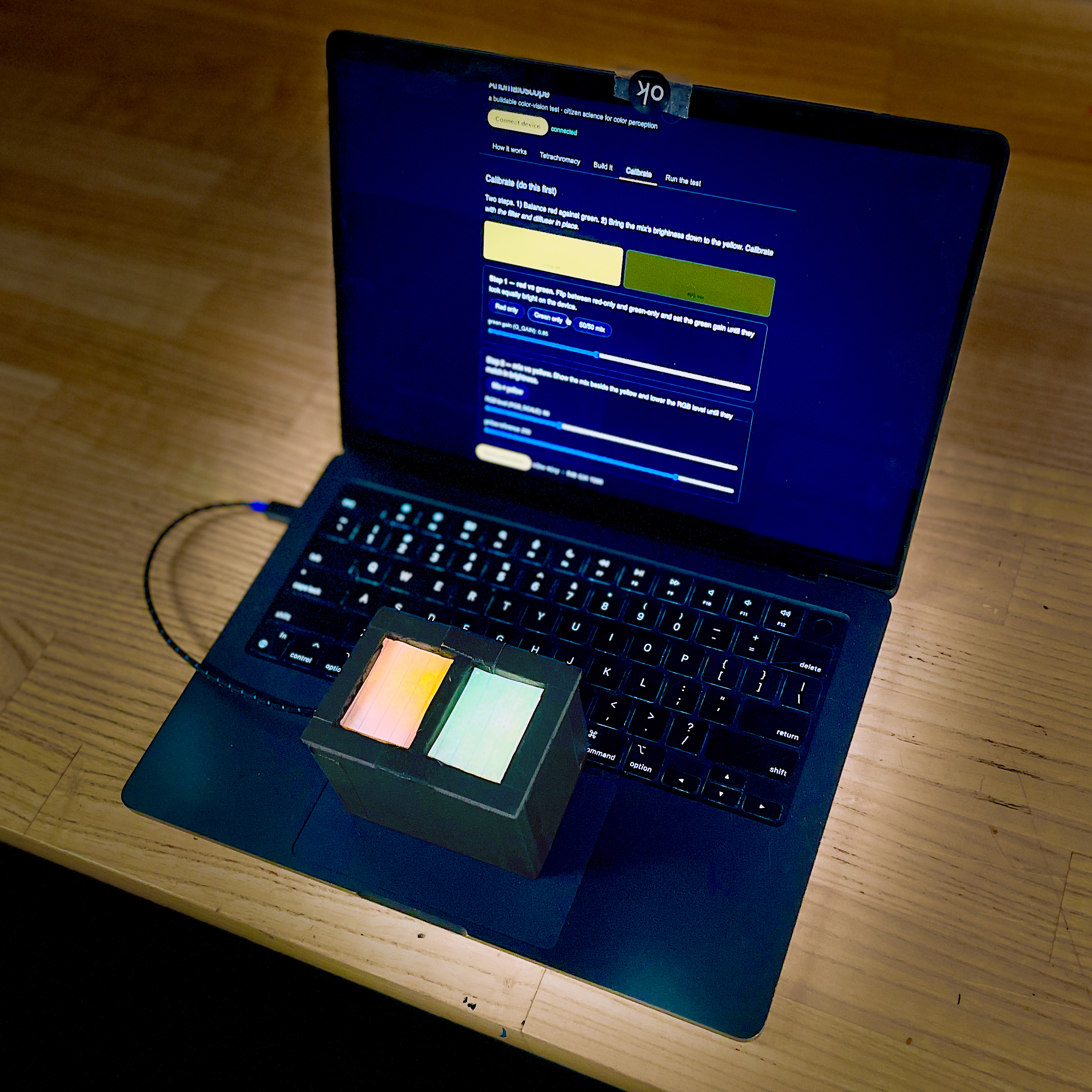
Let me introduce the Web Anomaloscope: a citizen-science project to measure color vision and search for tetrachromats. Anyone can build one for about $50 and run tests from a web browser.
An anomaloscope is the standard instrument for measuring color vision. In the classic Rayleigh match, you adjust the balance of red and green light until it matches a fixed yellow. The result is not simply whether someone finds a match, but how much variation they will accept as “the same yellow.” Most people accept a fairly broad range. A rare few accept almost none, because they carry a fourth class of cone and can distinguish colors the rest of us blur together. Those are the tetrachromats—and this is how you find them.
The problem has never been the test. It has been access to the instrument. David Brainard’s lab at the University of Pennsylvania developed an Arduino-based anomaloscope controlled through MATLAB. I wanted something anyone could build and run without proprietary software, so I moved the entire interface into the browser. The Arduino simply drives the LEDs while a web page handles calibration, matching, data collection, and storage over USB (Chrome or Edge). Cut the enclosure from foam core, add an orange filter, and you have a working Rayleigh anomaloscope for about the price of dinner. With participants’ consent, each completed test contributes to an open dataset on human color vision.
The project grew out of The Color Gap, the manuscript I just finished about color, machines, and the space between what a screen can show and what an eye can see. The book argues that color is something a body helps make. The anomaloscope is that argument made into an instrument: two people sitting at the same box, disagreeing about yellow, and neither of them wrong.
Build one yourself, or read about how it works: https://anomaloscope.cairn.com.